Suburban properties situated along the flat watershed basins of Fort Bend, Harris, and Waller counties experience heavy seasonal pest pressure. Dense foliage, shaded turf lines, and expansive retention ponds near…
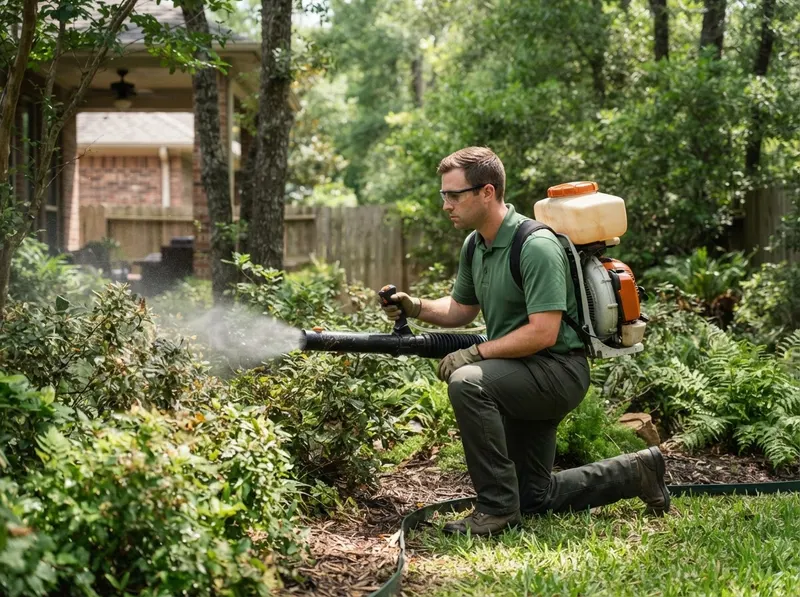
Suburban properties situated along the flat watershed basins of Fort Bend, Harris, and Waller counties experience heavy seasonal pest pressure. Dense foliage, shaded turf lines, and expansive retention ponds near communities like Cinco Ranch, Grand Lakes, and Cross Creek Ranch create optimal harbourage conditions for Aedes and Culex species. Standing water in yard drains, saucer plants, and landscape beds becomes an active breeding site within 7 days during summer temperatures exceeding 85 degrees. Standard retail misting units and hardware-store coils rarely sustain enough residual control to neutralize breeding insects sheltered beneath broadleaf shrubs, boxwoods, and crepe myrtles.
A professional barrier approach targets the undersides of leaves where adult populations rest during peak daytime heat, combined with targeted larvicide application in non-draining areas like catch basins and gutter downspout extensions. In master-planned developments such as Elyson, Cane Island, Firethorne, Silver Ranch, and Pine Mill Ranch, lot drainage infrastructure frequently retains hidden subsurface moisture. Step 1 involves identifying and treating active damp pooling zones near foundations and property lines. Step 2 requires an atomized application to exterior vertical structures and low-hanging canopy lines, avoiding flower blossoms to minimize non-target exposure. Step 3 includes inspecting perimeter fencing and under-deck voids where airflow is restricted.
Selecting treatment options involves a direct balance between single-event suppression and seasonal barrier maintenance. For homeowners near the Katy Mills area or Heritage Meadows hosting outdoor gatherings, a one-time intensive service applied 24 to 48 hours prior to the event suppresses biting insects across outdoor living zones. For continuous protection throughout the warm season between March and November, applications repeated at 21-to-30-day intervals sustain the protective barrier across new plant growth. The trade-off is scheduling frequency versus treatment longevity: single treatments eliminate active adults immediately but do not protect against new larvae maturing four weeks later, while recurring seasonal treatments sustain perimeter control through humid Gulf Coast rain cycles without requiring indoor chemical applications.
Every job gets a firm, written price after a free on-site visit.
Tell us about your mosquito reduction treatment job in Katy and we'll send a clear, written quote, usually the same day.
 Brazos Oak Pest Control